
Introduction
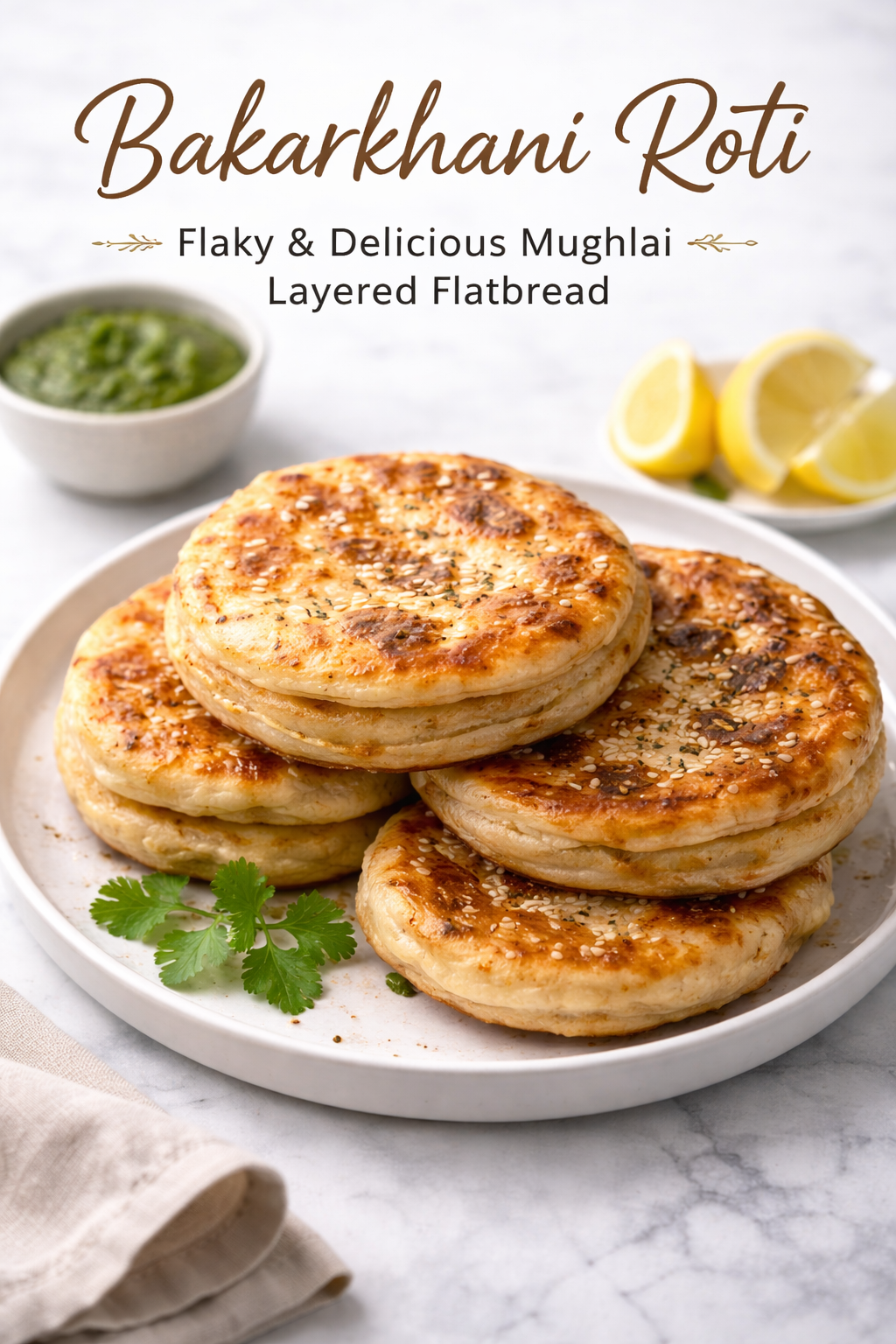
Bakarkhani Roti is a rich, flaky, and mildly sweet layered flatbread with deep roots in Mughlai cuisine. Known for its crisp outer layers and soft, buttery interior, this royal bread is traditionally prepared using refined flour, ghee, milk, and subtle aromatics like cardamom and saffron.
Unlike everyday rotis, Bakarkhani is indulgent and ceremonial. It is often prepared for special occasions, festivals, weddings, and religious gatherings. Enjoyed with tea or light curries, Bakarkhani reflects the elegance and refinement of historic royal kitchens.
Where Is Bakarkhani Roti Commonly Sold?
Bakarkhani Roti is traditionally sold in:
- Old Delhi (India) – near Jama Masjid bakeries
- Kashmir – local bakeries and traditional households
- Hyderabad (India) – Irani cafés and Mughlai restaurants
- Pakistan (Lahore & Karachi) – street bakeries and tea shops
- Modern Middle Eastern bakeries (adapted versions)
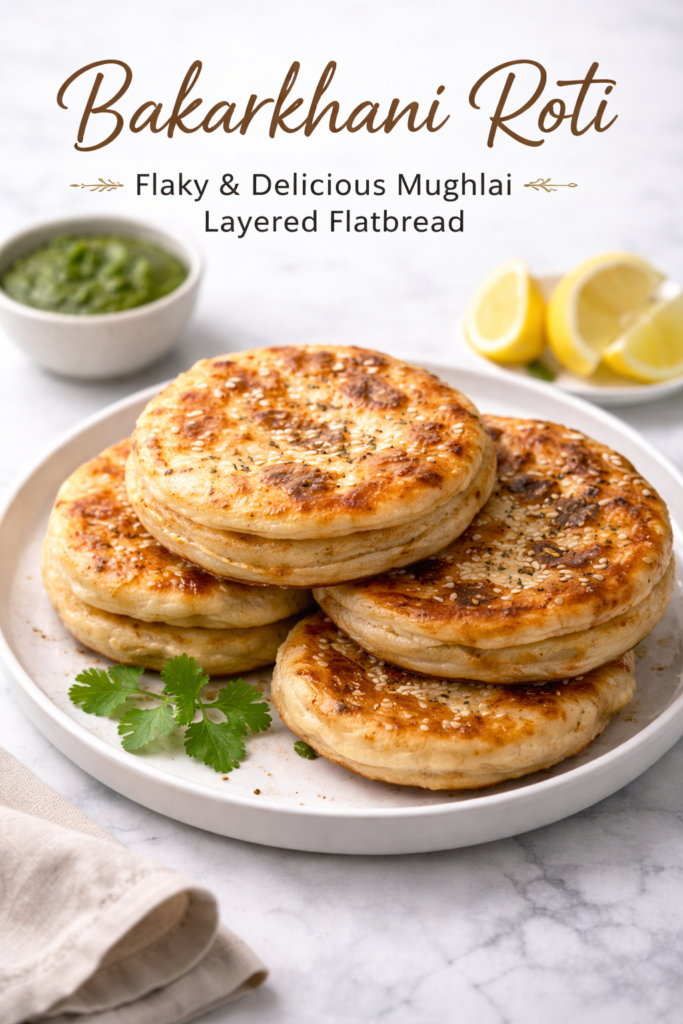
It is most commonly baked in tandoors and sold fresh in the early mornings.
Preparation & Cooking Time
| Time Type | Duration |
|---|---|
| Preparation Time | 20 minutes |
| Resting Time | 45 minutes |
| Marination Time | Not required |
| Soaking Time | Not required |
| Cook Time | 15–20 minutes |
| Total Time | Approximately 1 hour 25 minutes |
Ingredients
Dough Ingredients
- All-purpose flour (maida) – 2 cups (250 g)
- Warm milk – ½ cup
- Sugar – 2 tablespoons
- Salt – ½ teaspoon
- Ghee or unsalted butter – 4 tablespoons
- Cardamom powder – ½ teaspoon
- Saffron strands (optional) – 8–10 strands
- Warm water – 2–3 tablespoons (as needed)
For Layering & Topping
- Melted ghee – 3 tablespoons
- Sesame seeds or poppy seeds – 1 tablespoon
- Milk (for brushing) – 2 tablespoons
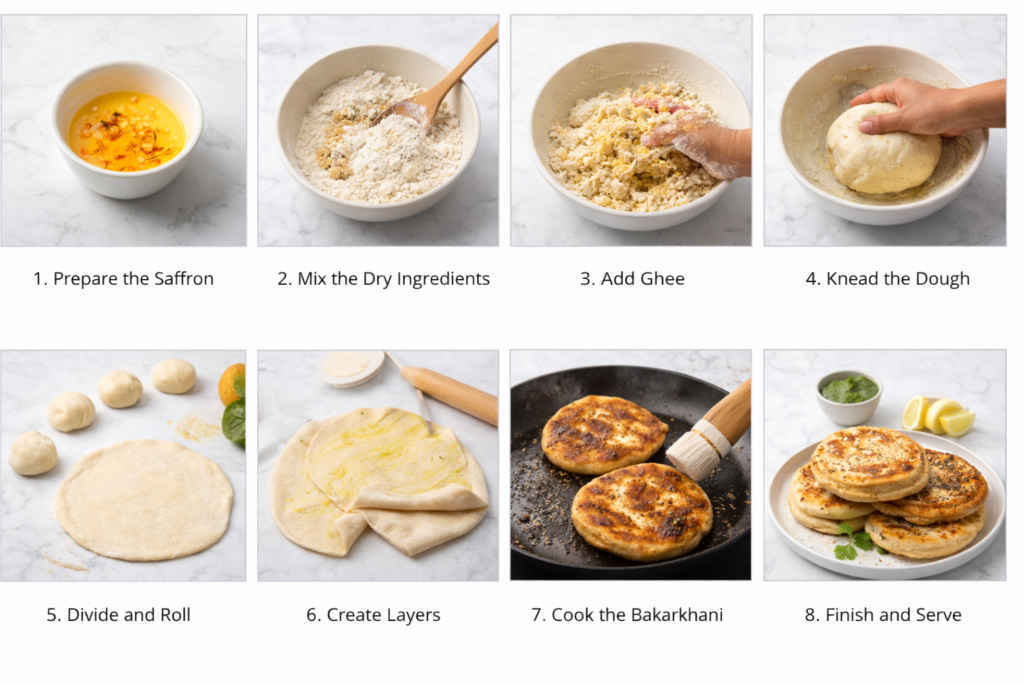
Step-by-Step Instructions
Step 1: Prepare the Saffron (Optional)
Soak saffron strands in 2 tablespoons of warm milk for 10 minutes and set aside.
Step 2: Mix the Dry Ingredients
In a large bowl, combine all-purpose flour, sugar, salt, and cardamom powder. Mix well.
Step 3: Add Ghee
Add ghee to the flour mixture and rub it in using your fingers until the mixture resembles coarse breadcrumbs.
Step 4: Knead the Dough
Gradually add warm milk and saffron milk (if using). Add water little by little and knead into a soft, smooth dough. Cover and let it rest for 45 minutes.
Step 5: Divide and Roll
Divide the rested dough into 4 equal portions. Roll each portion into a thin circular sheet.
Step 6: Create Layers
Brush the rolled dough generously with melted ghee. Fold it like an envelope or roll it into a spiral, then gently flatten into a thick disc.
Step 7: Cook the Bakarkhani
Heat a heavy tawa or skillet on medium heat. Place the roti on the pan and cook for 2–3 minutes per side, brushing with milk and ghee until golden brown spots appear.
Step 8: Finish and Serve
Sprinkle sesame or poppy seeds while cooking. Remove from heat and serve warm.
Servings
- Serves: 4 people
- Yield: 4 Bakarkhani Rotis
Nutrition Information (Approximate Per Roti)
| Nutrient | Amount |
|---|---|
| Calories | 280 kcal |
| Carbohydrates | 38 g |
| Protein | 6 g |
| Fat | 12 g |
| Saturated Fat | 7 g |
| Sugar | 6 g |
| Fiber | 1.2 g |
| Sodium | 180 mg |
Nutrition values are estimates and may vary.
Special Notes & Tips
- Traditionally baked in a tandoor, but a heavy pan works well at home.
- For a bakery-style version, bake in an oven at 190°C (375°F) for 12–15 minutes.
- Store in an airtight container for up to 2 days.
- Best enjoyed with Kahwa, Irani chai, or Sheer chai.
- Adding yeast creates a modern bakery-style Bakarkhani (optional).
Conclusion
Bakarkhani Roti is a timeless Mughlai flatbread that represents elegance, tradition, and culinary artistry. With its flaky layers, gentle sweetness, and aromatic flavor, this bread elevates any meal or tea-time experience.
Whether you enjoy it fresh from the pan or pair it with a warm cup of tea, Bakarkhani remains a treasured recipe that beautifully connects history, culture, and taste.